

Did you know childhood nearsightedness is becoming more common? More children are developing myopia at younger ages, and many are experiencing faster prescription changes than previous generations. While glasses and contact lenses can improve vision, they don't address the progression of myopia itself. Our myopia management programs aim to help slow the progression of nearsightedness and support your child's long-term eye health.
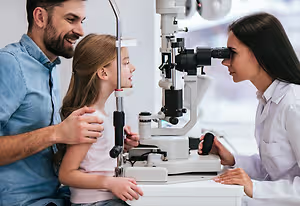

Myopia Management for Children Across Metro Atlanta

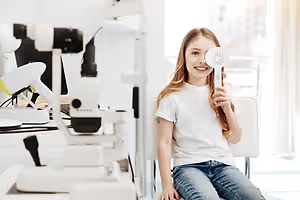

More Than Stronger Glasses
Protect Your Child's Future Vision

Taking a Proactive Approach to Childhood Myopia
Quick Links

Locations
With convenient locations across Georgia, DePoe Eye Center makes it easy to access eye care and eyewear wherever life takes you.
Eye Doctors
Across every DePoe Eye Center location, our optometrists share a commitment to providing thoughtful, patient-centered care.
SEE THE WORLD BETTER
Find a DePoe Eye Center location near you and schedule your eye exam today!
What Does It Mean to Be Nearsighted?
Myopia, commonly known as nearsightedness, is a vision condition that makes distant objects appear blurry while nearby objects remain clear. It develops when the eye grows too long from front to back, causing light to focus in front of the retina instead of directly on it.
Myopia often begins during childhood and can continue to progress throughout the school-age and teenage years. As prescriptions become stronger, the risk of developing certain eye health complications later in life may increase.
Why is it Important to Manage Myopia?
Many parents assume stronger glasses are simply a normal part of growing up. While glasses and contact lenses can improve vision, they don't address the progression of myopia itself.
As myopia continues to worsen, it may increase the risk of developing severe eye health conditions later in life, including:
-
Retinal detachment
-
Glaucoma
-
Macular degeneration
-
Cataracts
-
Other sight-threatening complications associated with high myopia
Signs Your Child May Be Developing Myopia
Children don't always recognize when their vision is changing. In many cases, parents or teachers notice the signs first. Common signs of myopia include:
-
Squinting to see distant objects
-
Sitting very close to screens
-
Holding books close while reading
-
Difficulty seeing the board at school
-
Frequent headaches
-
Increased eye strain
-
Complaints of blurry distance vision
-
Frequent prescription changes
If you've noticed any of these signs, a comprehensive eye exam can help determine whether myopia may be developing.
How Myopia Management Works
Myopia management takes a proactive approach to childhood nearsightedness. Instead of simply correcting blurry vision, the treatment aims to slow the progression of myopia and support long-term eye health.
Every child is different, which is why our eye doctors create personalized plans based on factors such as age, prescription changes, lifestyle, family history, and overall eye health. Throughout treatment, we closely monitor your child's progress and make adjustments as needed.
MiSight® 1-Day Contact Lenses
MiSight® 1-day contact lenses are specially designed to correct vision and help slow the progression of myopia. These daily disposable lenses provide clear vision while supporting long-term eye health.
Orthokeratology
Orthokeratology, often called ortho-k, uses specially designed contact lenses worn overnight to reshape the cornea while your child sleeps. Many children enjoy clear daytime vision without the need for glasses or contact lenses during waking hours.
Atropine Eye Drops
Low-dose atropine eye drops have been shown to help slow the progression of childhood myopia. This treatment is often recommended as part of a personalized management plan and may be combined with other treatment options
Is My Child a Candidate for Myopia Management?
Many children who are experiencing increasing prescriptions may benefit from myopia management. Your child may be a candidate if they:
-
Have been diagnosed with myopia
-
Experience frequent prescription changes
-
Have a family history of nearsightedness
-
Spend significant time using screens or doing near-work activities
-
Are between the ages of 6 and 16
The best way to determine whether myopia management is appropriate for your child is through a comprehensive eye exam and consultation with one of our eye doctors.
Myopia Management Near You
DePoe Eye Center proudly provides myopia management services for families throughout Metro Atlanta and Georgia. Our optometrists work closely with parents to monitor vision changes and develop personalized treatment plans that support healthy visual development.
Myopia management is available at select DePoe Eye Center locations, including Stockbridge, South Point (McDonough), and Dallas.

Helping Growing Eyes Stay Healthy
Manage Myopia Before It Progresses
Childhood myopia doesn't have to be a wait-and-see condition. Early intervention can make a meaningful difference in your child's long-term eye health and visual development. Schedule an appointment to learn whether myopia management may be right for your child.