

When was your last eye exam? Perhaps it's been a few years, or maybe you're preparing for your very first appointment. Either way, knowing what happens during a comprehensive eye exam can make the experience feel much more comfortable.
An eye exam involves much more than reading letters on a chart. It's an opportunity to check your vision, assess your eye health, and identify changes that could affect your eyesight over time. At DePoe Eye Center, we believe great eye care starts with listening. Our optometrists take the time to understand your concerns, explain each part of your examination, and help you feel confident about your vision.
What to Expect During Your Eye Exam
Every pair of eyes has its own story, which is why your eye exam begins with a conversation. Your optometrist will ask about your vision, medical history, current medications, and any symptoms you've experienced. They may also ask about your daily routine, including how much time you spend working at a computer, driving, or reading.
This conversation helps your eye doctor understand what matters most to you and guides the tests that follow. Although the exact order may vary, most comprehensive eye exams include several familiar steps.
Step 1: Checking Your Visual Acuity
Your exam will typically begin with a visual acuity test, the familiar eye chart with rows of letters that become progressively smaller.
You'll read the letters from a set distance, first with one eye and then the other. This helps your optometrist measure how clearly you see and determine whether your current glasses or contact lenses provide the vision correction you need.
Step 2: Finding Your Prescription
Next comes the refraction test, which helps determine your prescription for glasses or contact lenses.
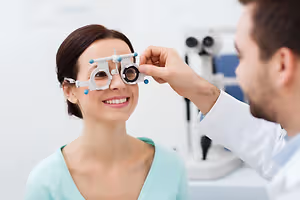
Your optometrist may use an instrument called a phoropter, which places different lenses in front of your eyes while you look at a chart. You'll answer simple questions about which lens makes the letters appear clearer.
There's no pressure to get every answer right. Your responses help your doctor fine-tune your prescription so your glasses provide comfortable, clear vision.
Step 3: Checking How Your Eyes Work Together
Clear vision also depends on how well your eyes coordinate with each other. Your optometrist may assess your eye movements, focusing ability, and how effectively both eyes work as a team.
These tests can help identify concerns that contribute to headaches, eye strain, double vision, or difficulty focusing during everyday activities.
Step 4: Examining Your Eye Health
Once your vision has been assessed, your optometrist will take a closer look at the health of your eyes.
A slit-lamp examination uses a specialized microscope and focused light to examine structures such as your cornea, iris, and natural lens. Your doctor may also measure your eye pressure as part of a glaucoma assessment.
At DePoe Eye Center, advanced diagnostic technology supports these evaluations. Our Optos digital retinal imaging system can capture detailed images of the back of your eyes, helping our doctors assess retinal health and monitor changes over time.
These examinations provide valuable information about your eye health, even when your vision feels perfectly clear.
Will My Eyes Need to Be Dilated?
One of the most common questions patients have about eye exams is whether they'll need dilating drops. Dilation allows your optometrist to see more of the structures inside your eyes, including the retina and optic nerve, which play important roles in healthy vision.
If your doctor recommends dilation, they'll place special drops in your eyes to temporarily widen your pupils. The drops usually take about 15 to 30 minutes to work, giving your optometrist a clearer view of the back of your eyes.
You may experience temporary blurry near vision or increased sensitivity to light afterward. These effects typically wear off within a few hours, although they can last longer for some patients. Bringing sunglasses can make the trip home more comfortable, and arranging a ride may be helpful if your vision feels affected.
At DePoe Eye Center, our Optos digital retinal imaging technology provides detailed views of the retina and can sometimes reduce the need for dilation. Your optometrist will recommend the most appropriate approach based on your eye health and individual needs.
How Long Does a Comprehensive Eye Exam Take?
Most comprehensive eye exams take approximately 30 to 60 minutes, although the exact time depends on your vision needs, medical history, and the tests your doctor recommends.
If your appointment includes dilation, additional imaging, or a more detailed medical evaluation, you may need extra time. Your eye care team can help you understand what to expect when scheduling your visit.
A little preparation can also make your appointment easier. Bring your current glasses or contact lenses, a list of medications, and any questions about your eyesight. If you've noticed changes in your vision, such as frequent headaches, difficulty driving at night, or increased eye strain, make a note of them so you can discuss them with your doctor.
What Happens After Your Eye Exam?
Once your examination is complete, your optometrist will review the results with you and explain what they mean for your vision and eye health.
If your prescription has changed, you'll receive recommendations for glasses or contact lenses that suit your needs. If your doctor identifies an eye health concern, they'll discuss appropriate next steps, which may include additional testing, treatment, or ongoing monitoring.
At DePoe Eye Center, we want every patient to leave their appointment with a clear understanding of their eye health. Our team takes the time to answer questions and provide personalized recommendations, whether you're updating your glasses, managing an existing condition, or simply checking in on your vision.
Comprehensive Eye Exams Across Georgia
Your eyesight plays a part in almost everything you do, from enjoying a favorite book to recognizing familiar faces and taking in the world around you. Regular comprehensive eye exams help protect those everyday moments by giving your optometrist the opportunity to identify changes and support your long-term eye health.
For more than three decades, DePoe Eye Center has helped individuals and families throughout Georgia receive thoughtful, personalized vision care. With experienced optometrists, advanced diagnostic technology, and a welcoming approach, we make it easier to feel comfortable and informed throughout your visit.
Whether you're scheduling your first eye exam or returning after a few years, we're here to help you take the next step toward healthy vision.
Find your nearest DePoe Eye Center location across Metro Atlanta and Georgia, and book your comprehensive eye exam today.