

Your child passed their school vision screening, so their eyes are healthy…right? Not necessarily.
School vision screenings play an important role in identifying children who may have vision problems, but they aren't designed to detect every vision issue that can affect your child. In fact, many children with vision problems pass a screening without anyone realizing there's an underlying concern.
That's why comprehensive eye exams remain the gold standard for protecting your child's vision and eye health. Whether you're preparing for a back-to-school eye exam or simply want to make sure your child's vision is developing as it should, DePoe Eye Center is here to help families throughout Metro Atlanta and Georgia.
What Is a School Vision Screening?
School vision screenings are designed to identify students who may have obvious vision problems quickly. They're performed at school by nurses, volunteers, or trained staff and involve reading letters on an eye chart from a distance.
These vision screenings are valuable because they can help identify children who may need additional evaluation. However, they're intended as a basic screening tool, not a comprehensive assessment of your child's vision or eye health. Passing a screening simply means your child met the limited criteria being tested; it doesn't mean their eyes are free of vision problems.
What Happens During a Pediatric Eye Exam?
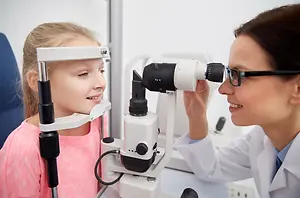
During a pediatric eye exam, your optometrist evaluates how clearly your child sees and how their visual system functions. Our eye exams at DePoe Eye Center evaluate:
- Visual acuity and prescription changes
- Eye alignment and coordination
- Eye focusing ability
- Eye movement and tracking
- Depth perception
- Color vision, when appropriate
- Overall eye health, including the retina and optic nerve
What School Vision Screenings Can Miss
One of the biggest misconceptions parents have is that passing a school screening means their child doesn't need an eye exam. Here are some of the conditions that can go undetected during routine vision screening at school.
Prescription Changes
Children are remarkably adaptable. Even when their prescription changes, they may continue to function well enough to pass a basic vision screening.
Instead of telling you they can't see, they may simply squint or move closer to the board. A comprehensive eye exam can detect subtle prescription changes long before they begin affecting learning.
Eye Tracking and Teaming Problems
Your child's eyes must move smoothly across a page, work together as a team, and maintain their place while reading line after line. When these visual skills aren't functioning properly, children may lose their place, skip words, reread sentences, or become frustrated.
Because school screenings don't evaluate eye tracking or eye teaming, these issues often go unnoticed despite having a significant impact on classroom performance.
Depth Perception
Depth perception helps children judge distances accurately, making it essential for sports, playground activities, driving later in life, and many everyday tasks.
Difficulty with depth perception may make catching a ball, climbing stairs, or participating confidently in physical activities more challenging. Since most vision screenings don't test this skill, children can experience ongoing difficulties without anyone recognizing the cause.
Eye Health Conditions
Perhaps the most important difference is that school screenings don't evaluate the health of your child's eyes. A comprehensive eye exam allows your optometrist to examine structures inside the eye. This includes the retina and optic nerve, looking for signs of eye disease or other health concerns.
Signs Your Child May Need an Eye Exam
Even if your child passes a school vision screening, it's important to pay attention to changes in their behavior or school performance. Consider scheduling a pediatric eye exam if your child:
- Squints to see distant objects
- Complains of headaches or tired eyes
- Holds books or digital devices very close
- Frequently rubs their eyes
- Loses their place while reading
- Struggles to focus on homework
- Tilts or turns their head when looking at objects
- Covers one eye while reading or watching TV
- Has declining grades or difficulty concentrating
- Avoids reading or other close-up activities
A Back-to-School Eye Exam Helps Children Feel Confident
Preparing for a new school year often means buying backpacks, notebooks, and new clothes, but one of the most important items on your checklist should be a back-to-school eye exam.
From reading textbooks and viewing classroom presentations to completing assignments on digital devices, children rely on their vision throughout the school day. Scheduling an eye exam before school begins also gives families time to update prescription eyeglasses or discuss treatment options.
Supporting Families Across Metro Atlanta & Georgia
DePoe Eye Center proudly provides eye care for children and families throughout Metro Atlanta and communities across Georgia. Our experienced eye doctors take the time to evaluate every aspect of your child's vision; not just whether they can read an eye chart.
Whether your child is due for their first eye exam, needs an updated glasses prescription, or could benefit from myopia management, our team is here to provide personalized recommendations.
Schedule Your Child's Eye Exam at DePoe Eye Center
School vision screenings are an excellent first step, but they aren't a substitute for comprehensive eye exams. If you're planning for the upcoming school year, schedule a pediatric eye exam at DePoe Eye Center. With eye clinics throughout Metro Atlanta and Georgia, we're here to help your child see clearly, learn confidently, and thrive every step of the way.